.svg)

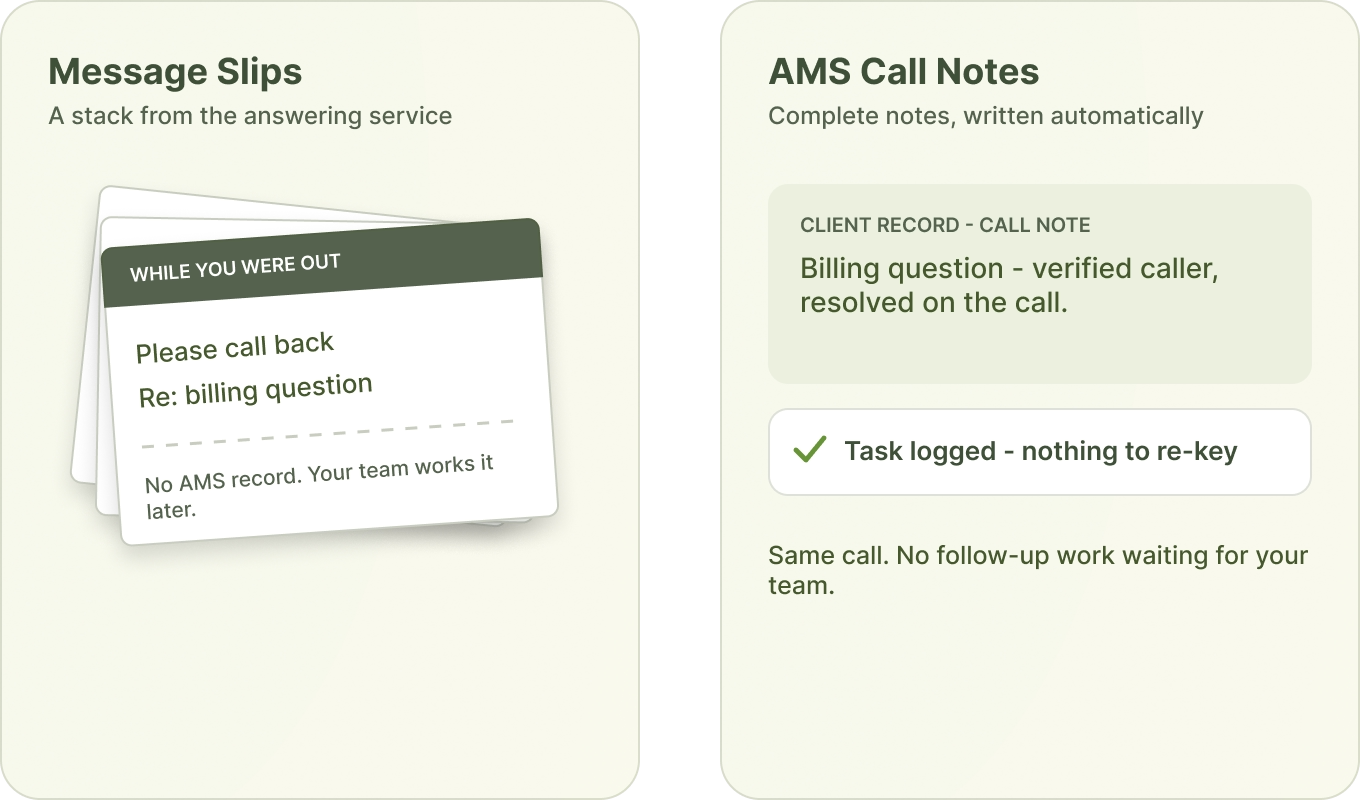
Switching from a traditional answering service to an AI receptionist changes what happens on the call: an answering service takes a message and hands it back to your team to work later, while an AI receptionist verifies the caller, resolves routine requests against your management system, and logs a note automatically. That is the core of what changes when you switch from an answering service to an AI receptionist: the work moves from message-taking to actual resolution, and the cost model usually moves from per-minute to flat. This post walks through what changes on capability, cost, and workflow, and how to move over without disrupting clients.
Key Takeaways
- An answering service takes messages; an AI receptionist resolves routine calls and writes the note to your AMS.
- The cost model typically shifts from per-minute billing to a flat rate, which is easier to predict during high-volume weeks.
- Callers get the same person every time in the sense that the AI has your AMS context - not a different call-center rep each call.
- Pure message-taking is still fine for some agencies; the switch pays off when routine calls are your bottleneck.
- Migration is mostly forwarding your line and setting routing rules - not rebuilding your phone setup.
What actually changes when you switch from an answering service to an AI receptionist?
The biggest change is on the call itself. A traditional answering service is a human call center that can't pull a policy, issue a certificate, or answer a coverage question. It takes a message and passes it to you, and you often get a different person each call. An AI receptionist connects to your AMS, verifies the caller, resolves routine requests on the spot, and writes a note and task to the client record automatically. The second change is cost: answering services usually bill per minute, so a busy month costs more, while an AI receptionist is typically flat. The third is the follow-up load: messages create work for your team; resolved calls don't. If you want the head-to-head on capability and cost, see AI receptionist vs answering service cost and live answering vs AI answering.
Paying per minute for messages you still have to work? → Talk to Sonant
Answering service vs AI receptionist: what's different after the switch
Here is the before-and-after at a glance.

What to evaluate before you make the switch
Moving call handling means moving client data, so vet the vendor's security and governance. Confirm a current SOC 2 report. The AICPA SOC 2 framework explains the controls an auditor tests. Check that the vendor's practices line up with the NAIC model bulletin on the use of AI, which state regulators are using to set expectations. Keep a neutral consumer reference like the Insurance Information Institute on hand for anything client-facing. Then work through the practical side: how fast you can go live, how routing is set, and where the AI hands off to a person. Our guides on setup time, how to choose an AI receptionist vendor, and what AI should handle versus a licensed agent cover those decisions.
How Sonant fits
If you're leaving an answering service, Sonant is the coverage that actually handles the call instead of taking a message. It answers overflow, after-hours, and Spanish-speaking calls, verifies the caller against your AMS data, resolves routine requests on the spot, and writes a note and task to the client record in EZLynx, Applied Epic, HawkSoft, or AMS360, so your team stops working a pile of message slips. Migrating is mostly pointing your line at Sonant and setting your routing rules; you keep your number and your team. Sonant is honest about the boundary: it covers the routine, high-volume calls, and licensed decisions still go to your people. An answering service is fine if all you need is someone to take a name and number after hours, but if routine calls are your bottleneck and your team is re-keying messages, that's the case for switching. For the full picture, see the AI receptionist for insurance agencies guide and our roundup of the best AI answering services for insurance.
Ready to move from message-taking to calls that actually get handled? Talk to Sonant →
Related reading
- Insurance answering service vs virtual assistant
- Best AI answering services for insurance
- Live answering vs AI answering services
- Is an AI receptionist cheaper than an answering service?
- How long does setup take?
- How to choose an AI receptionist vendor
- AI receptionist for insurance agencies






.svg)


.svg)


