.svg)


The best AI receptionist for an independent insurance agency is the one that connects to your management system, finishes routine calls on its own, and routes anything that needs a license to your team. For an independent, the stakes are simple: you do not have a large bench, so every missed call is either lost revenue or extra work later. This guide gives independents a straight way to compare the best AI receptionist options without getting lost in feature lists.
Key Takeaways
- Independents should weight insurance capability and AMS write-back above voice quality - a smooth voice that can't do the work doesn't help.
- The right AI receptionist resolves routine calls (payments, claim intake, documentation) end to end, not just takes messages.
- Escalation quality matters as much as automation: it must hand licensed decisions to your team with context attached.
- Availability is where independents gain the most - overflow, after-hours, and weekends that a small team simply can't cover.
- An AI receptionist is coverage for the calls you can't reach, not a replacement for the relationships an independent is built on.
What is the best AI receptionist for an independent insurance agency?
The best AI receptionist for an independent insurance agency is one built for P&C work, not a generic phone bot. It connects to your AMS (EZLynx, Applied Epic, AMS360, or HawkSoft), verifies the caller before sharing anything, resolves routine requests on the spot, and writes a note with a transcript back to the client record. Because independents run lean, the real value is the calls it handles when no one is free: overflow during the day, evenings, weekends, and Spanish-language callers.
Independents also care about control. You want to add or remove staff yourself and update routing without a support ticket, as covered in user management in an AI receptionist. And you want it to know its limits: routine work is automated, licensed decisions go to a person. Our guide to what AI should handle vs a licensed agent walks through that line. For the broader category, start with the AI receptionist for insurance agencies overview and our take on phone support for independent agents.
Running lean and missing calls? → Talk to Sonant
How the options compare for an independent
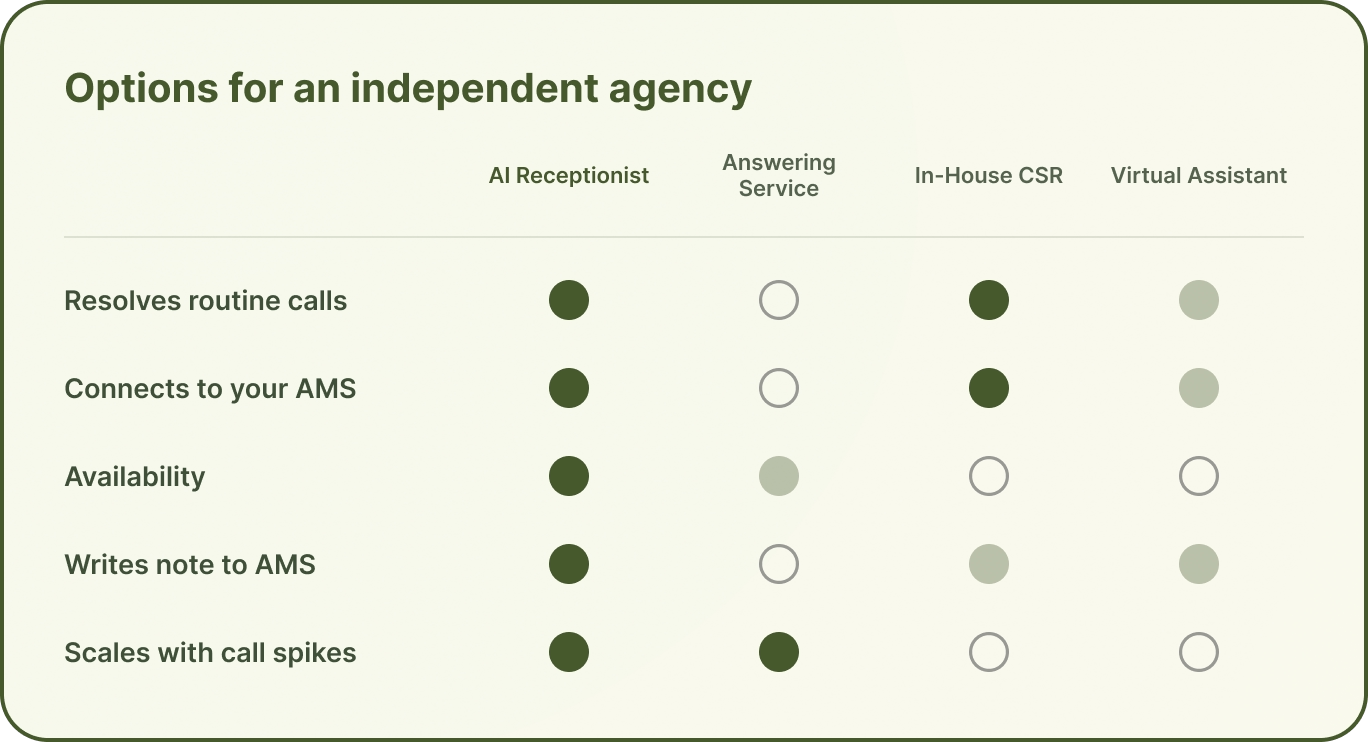
Independents usually weigh an AI receptionist against three familiar alternatives. The table compares them on the dimensions that matter, not on brand-name figures, which we do not fabricate.
What to evaluate in an AI receptionist for an independent agency
Score each option on a weighted scorecard. These five criteria, weighted, sum to exactly 100%:
- Insurance capability - 30%. Does it verify callers and resolve real P&C requests - payments, claim intake, documentation - or only route and take messages? See caller verification.
- AMS write-back - 25%. Does every call become a note with a transcript on the client record, with a task assigned? For an independent with no back office, this is the difference between clean records and a pile of follow-ups. See AMS call notes automation.
- Availability - 20%. Does it cover overflow, after-hours, and weekends? This is where independents recover the most missed revenue. See reducing missed calls and after-hours calls.
- Escalation quality - 15%. When it hands off a licensed decision, does the staffer get the full context, or start cold?
- Cost model and control - 10%. Is pricing predictable as you grow, and can you manage users and routing yourself? See insurance virtual assistant cost.
On the compliance side, hold any vendor to the same bar you would any partner handling client data: ask about a recognized attestation such as SOC 2 and how they align with the NAIC model bulletin on AI. For independent-market context, the Insurance Information Institute is a solid off-domain reference, and our Consumer AI Readiness Report covers how callers actually respond to AI answering.
How Sonant fits
Sonant is one AI receptionist built specifically for P&C independents, and here is the honest version of what it does. It answers overflow, after-hours, and Spanish-language calls, verifies the caller against your AMS data, and resolves routine requests. For example, it detects the caller's carrier and texts the matching payment link rather than transferring. When a call ends, it writes a note with the transcript to the client record and assigns a task, so nothing gets re-typed. You manage staff and routing yourself in the portal, with no support ticket.
For an independent, the point is not to replace your team; it is to cover the calls your team can't reach and keep the relationships that a licensed person handles best. Sonant routes anything requiring a license, quoting judgment, or real empathy to your staff, with the context already gathered. If you are weighing headcount, compare it against hiring an in-house CSR, and if you want to see how it sits alongside other phone-answering options, our best AI phone answering roundup covers the wider field. Background on the independent model itself is in our independent insurance agency guide.
Want to see how an AI receptionist would handle your agency's calls? Talk to Sonant →
Related reading
- AI receptionist for insurance agencies
- Best AI phone answering services for insurance agencies (2026)
- AI receptionist vs hiring an in-house CSR
- Phone support for the independent agent
- Can you manage your own users in an AI receptionist?
- What AI should handle vs a licensed agent
- The independent insurance agency, explained






.svg)

.svg)


