.svg)

According to the U.S. Census Bureau's American Community Survey, Spanish is by far the most common non-English language spoken at home in the United States, spoken by 61.1% of people who speak a language other than English. The best bilingual answering solution for an insurance agency is the one that can carry a complete conversation in the caller's language, confirm the caller's identity, and finish routine requests without dumping the call back on your team. Most "bilingual" options only get you halfway: they can greet a Spanish speaker but still have to transfer to an English-speaking staffer for anything real. This guide compares the categories of bilingual answering insurance agencies actually shop for and gives you a way to score them.
Key Takeaways
- "Bilingual" ranges widely - from a greeting script to a full end-to-end Spanish conversation. Score the depth, not the label.
- A bilingual answering service can take a message in Spanish but usually cannot pull a policy, verify a caller, or issue anything.
- A bilingual virtual assistant can do agency work, but only during set hours and only while that specific person is staffed.
- A bilingual AI receptionist can hold the whole conversation in Spanish, verify the caller against AMS data, act on routine requests, and log a note - around the clock.
- Human staff still win on complex, emotional, or judgment-heavy Spanish calls. The right setup is hybrid.
What are the best bilingual answering solutions for insurance agencies?
The best bilingual answering solutions for insurance agencies fall into three categories, and each serves a different need. A bilingual answering service is a human call center that greets and takes messages in Spanish, then routes them to you. That helps for overflow, but it cannot look at a policy or resolve anything. A bilingual virtual assistant is a remote staffer who speaks the language and can do real agency work, but only during their scheduled hours. A bilingual AI receptionist connects to your management system, holds the full conversation in Spanish, verifies the caller, handles routine requests on the spot, and writes a note back to the client record.
If a meaningful share of your book calls in Spanish, the difference between "greeted in Spanish" and "served in Spanish" is retention. For a deeper look at the language-coverage question specifically, see our guide to the bilingual AI receptionist and our overview of multilingual support for agencies. If you are weighing the human-versus-software tradeoff generally, our comparison of an insurance answering service vs a virtual assistant is a good starting point.
Not sure which fits your book of business? → Talk to Sonant
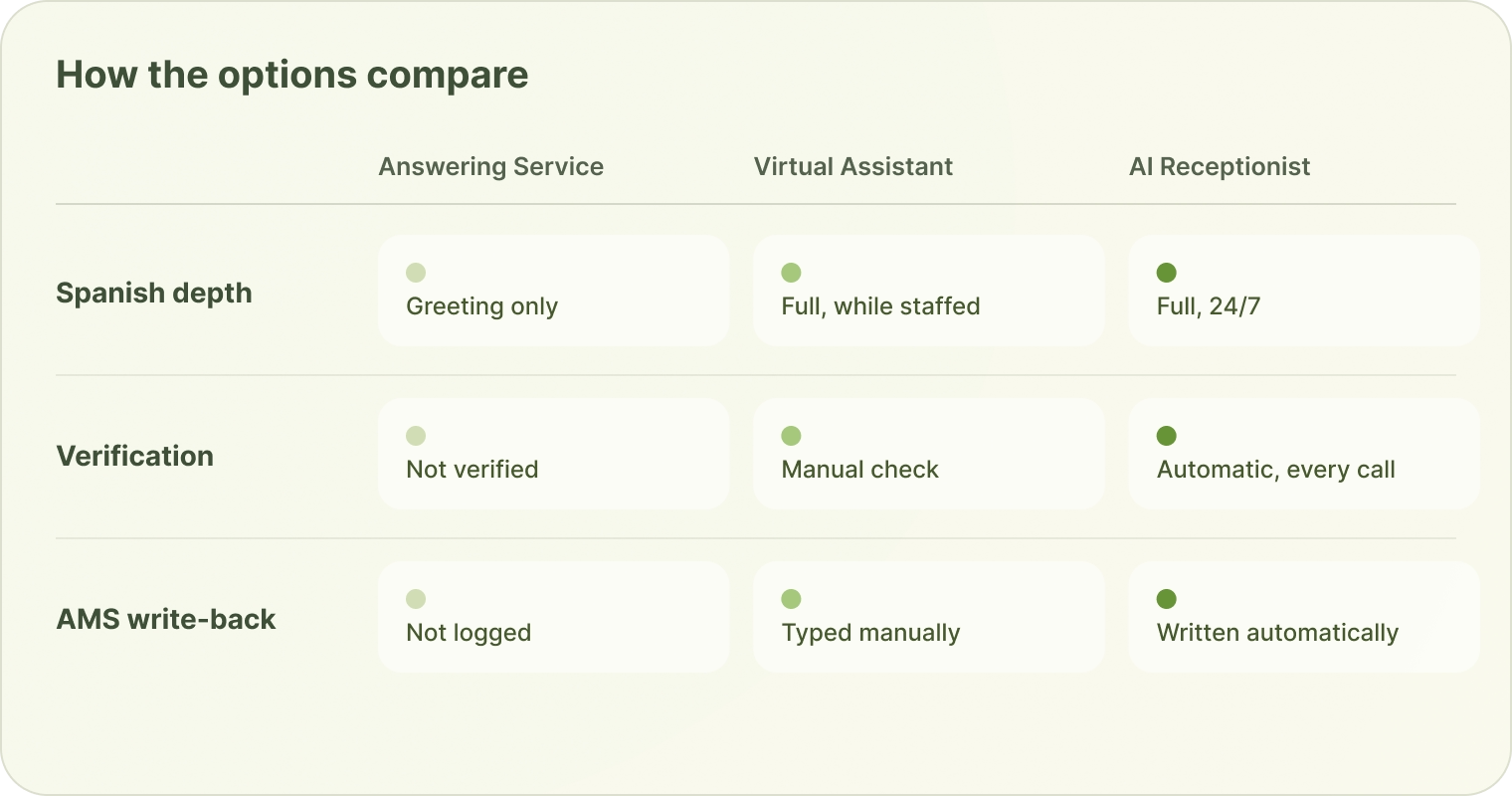
How the bilingual answering options compare
The table below compares the three categories on the dimensions that matter for an agency, not on brand names. We deliberately do not publish competitor pricing or feature figures we cannot verify; evaluate any specific vendor against these same rows.
What to evaluate in a bilingual answering solution
Use a weighted scorecard so you are not swayed by a slick demo in one language. These five criteria, weighted, sum to exactly 100%:
- Language depth - 30%. Can it hold the entire conversation in Spanish, or does it hand off after the greeting? This is the whole point, so it carries the most weight.
- Insurance capability - 25%. Can it verify the caller, act on routine requests (payments, claim intake, documentation), and know when to route to a licensed person?
- AMS write-back - 20%. Does every call land as a note on the client record with a transcript, or does someone re-type it later? See AMS call notes automation.
- Availability - 15%. Does it cover overflow, after-hours, and weekends, or only a set shift? See insurance after-hours calls.
- Cost model and predictability - 10%. Per-minute, per-seat, or flat - and does it scale with your call volume? See insurance virtual assistant cost.
On compliance, ask any vendor the same questions you would ask any technology partner: how caller data is handled, whether they hold a recognized security attestation like SOC 2, and how they align with the NAIC model bulletin on the use of AI by insurers. For context on how many U.S. households are more comfortable in Spanish, the Insurance Information Institute is a useful independent reference on the market you are serving. Our own Consumer AI Readiness Report covers how callers respond to AI answering.
How Sonant fits
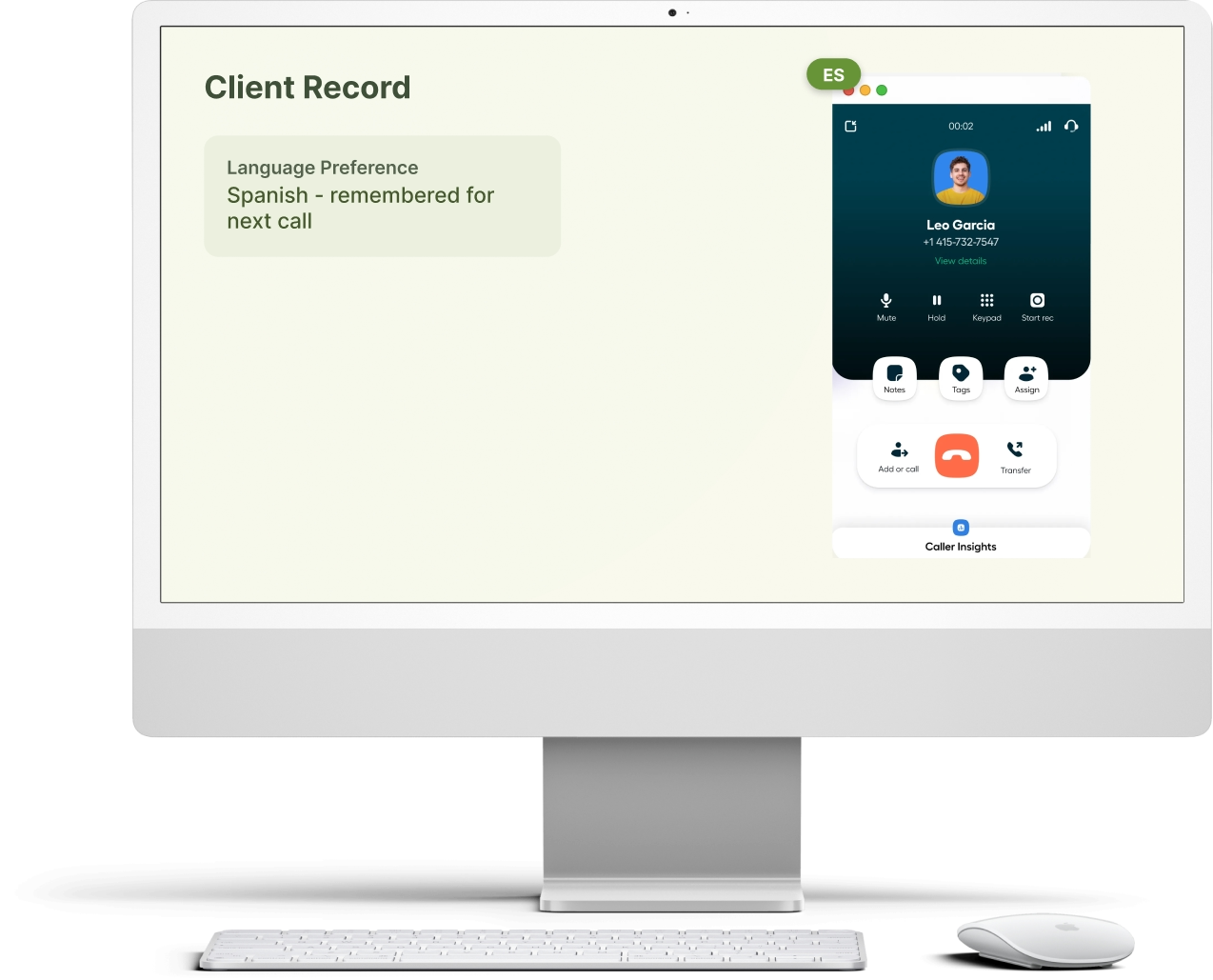
Sonant is one bilingual option, and it is honest about what it does. It handles the full conversation in Spanish, not just a greeting, and it remembers the client's language preference so the next call starts in the right language. It verifies the caller against your AMS data before sharing anything (see caller verification), handles routine requests like payments and claim intake, and after the call ends it writes a note with the transcript to the client record and assigns a task. It works with EZLynx, Applied Epic, AMS360, and HawkSoft.
It is not a replacement for your bilingual staff. A grieving claimant, a complex coverage question, or a delicate retention conversation still deserves a person, and Sonant routes those calls to a licensed staffer with the context already gathered. Think of it as coverage for the Spanish-language calls your team cannot get to (overflow, after-hours, and weekends), not a substitute for the people who close and keep business. If you want the broader picture, see our overview of the AI receptionist for insurance agencies and how it compares to a traditional answering service.
Want to hear a Spanish-language call handled end to end for your agency? Talk to Sonant →
Related reading
- Bilingual AI receptionist: how it handles Spanish-speaking callers
- Boost your insurance agency with multilingual support
- Best virtual assistant for insurance
- Best AI phone answering services for insurance agencies (2026)
- Insurance answering service vs virtual assistant
- AI receptionist for insurance agencies
- What happens to after-hours insurance calls






.svg)

.svg)


